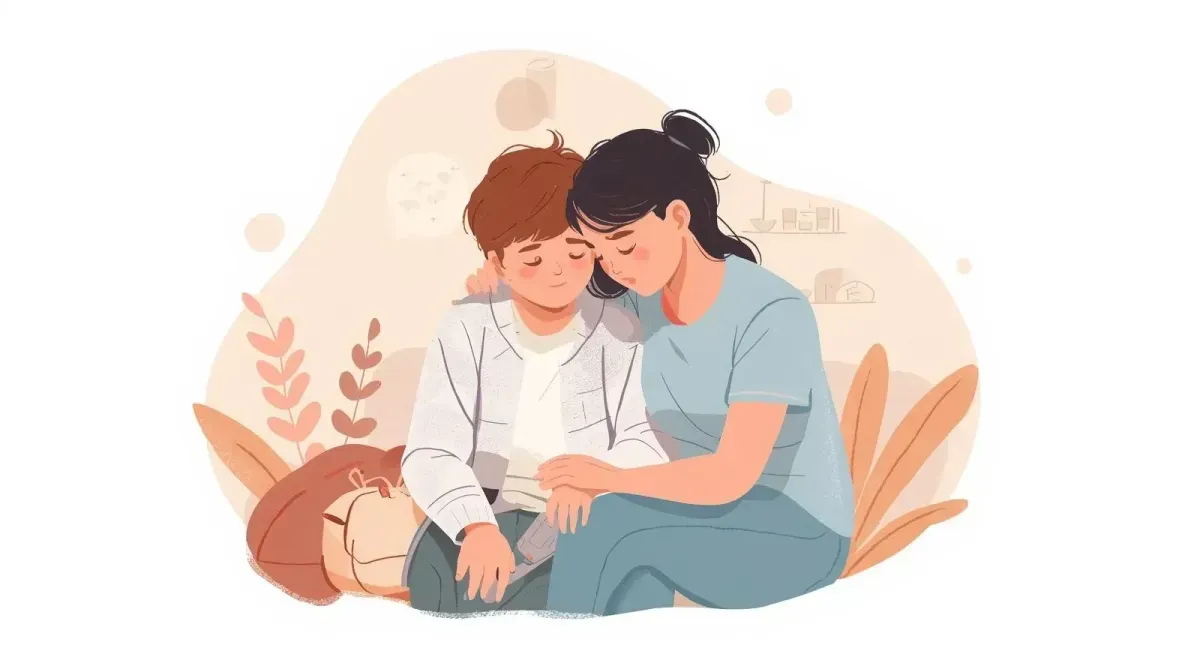
Struggling with Teenage Attitudes? You’re Not Alone
Struggling with Teenage Attitudes? You’re Not Alone
When Teenage Attitude Starts to Hurt
Why Teenage Attitudes Feel So Personal
What’s Actually Going On Beneath the Attitude
Teenage Attitude Is Often Armour, Not Defiance
Why Lectures and Long Talks Often Backfire
What Teenagers Still Need From You (Even If They Don’t Say It)
When School Pressure Makes Attitude Worse
How to Respond to Teenage Attitude Without Escalating
Your Regulation Still Matters (More Than You Think)
Repair Still Matters With Teenagers
When Parenting a Teen Starts to Feel Lonely
If you’re parenting a teenager and quietly thinking “I don’t recognise my child anymore”, let’s slow this down together.
Because this stage can feel deeply unsettling.
One day, your teen is warm and chatty.
The next, they’re distant, sarcastic, or irritated by everything you say.
And no one really prepares you for how personal that feels.
If you’re struggling with teenage attitudes — the eye-rolling, the sharp tone, the silence, the pushing away — you are not failing.
You are parenting a teenager.
And that is hard.
When Teenage Attitude Starts to Hurt
Many parents don’t talk about this part honestly.
They say things like:
“It’s just a phase.”
“They’ll grow out of it.”
But living with it day after day can feel exhausting.
Teenage attitude can feel like:
Rejection
Disrespect
Loss of connection
Walking on eggshells in your own home
You might find yourself replaying conversations at night.
Wondering if you said the wrong thing.
Or questioning whether you did something wrong earlier in their life.
These thoughts are incredibly common.
And they deserve compassion, not silence.
Why Teenage Attitudes Feel So Personal

One of the hardest things about this stage is how targeted it feels.
Your teenager may be polite with others.
But sharp with you.
That hurts.
It can make you think:
Why me?
Why do they talk to me like this?
Have I lost my place in their life?
But here’s an important reframe:
Teenage attitude is rarely about disrespect.
It is often about safety.
Teens push hardest against the people they feel safest with.
Not because they want to hurt you.
But because they don’t yet know how to manage what’s happening inside them.
What’s Actually Going On Beneath the Attitude
Teenagers are in the middle of intense change.
Their brains are rewiring.
Their emotions are stronger.
Their sense of identity is fragile.
At the same time, they feel pressure from:
School
Expectations
Social comparison
Fear of not being “enough”
Many parents don’t realise how deeply comparison affects teenagers.
Not just socially — but emotionally.
If you’ve ever wondered whether comparison plays a role in your teen’s reactions, this may help you see it more clearly: Why comparing children does more harm than good.
Attitude is often what shows up when emotions feel too big to name.
Teenage Attitude Is Often Armour, Not Defiance
From the outside, teenage attitude looks like defiance.
From the inside, it’s often protection.
Teenagers use attitude to:
Hide vulnerability
Protect independence
Avoid feeling exposed
Push away pressure they can’t articulate
That eye-roll?
It may be covering embarrassment.
That silence?
It may be emotional overload.
That sharp comment?
It may be fear of being judged.
When you see attitude as armour, not attack, your response begins to change.
Why Lectures and Long Talks Often Backfire

When parents feel shut out, the instinct is to explain more.
To talk longer.
To reason harder.
To “get through”.
But for many teenagers, long conversations feel like:
Criticism
Control
Pressure
Especially when emotions are already high.
What teens often need instead is:
Short sentences
Calm tone
Fewer words
More space
This doesn’t mean you stop parenting.
It means you parent differently.
What Teenagers Still Need From You (Even If They Don’t Say It)
Teenagers may act like they don’t care.
But they do.
They still need:
Emotional safety
Respect
Clear boundaries
To feel trusted
To know you’re available, not intrusive
They need to know:
“I’m here — without pushing.”
That balance is one of the hardest parts of parenting this stage.
When School Pressure Makes Attitude Worse
Many parents notice teenage attitude intensifies around school.
Exams.
Homework.
Expectations.
Fear of failure.
Academic pressure can amplify irritability, withdrawal, and emotional shutdown.
If school stress is part of what you’re seeing at home, support around learning and confidence can make a real difference — not just academically, but emotionally: Supporting academic success without pressure.
When teens feel constantly measured, attitude becomes a way to push back.
How to Respond to Teenage Attitude Without Escalating
You don’t need perfect responses.
You need steadier ones.
When your teen snaps or shuts down, try to:
Pause before reacting
Lower your voice
Keep your words brief
Responses that often help:
“I can see you’re not okay. I’m here.”
“We don’t have to talk right now.”
“I care, even when this feels hard.”
These responses don’t fix everything.
But they stop things from getting worse.
Your Regulation Still Matters (More Than You Think)
Teenagers may act like they don’t need you.
But they still borrow regulation from adults.
When you stay grounded:
You lower the emotional temperature
You show what self-control looks like
You create safety, even in silence
This doesn’t mean you never feel triggered.
It means you notice it and slow the moment down.
That alone is powerful.
Repair Still Matters With Teenagers
Some parents stop repairing once children are older.
They think:
“They should know better by now.”
But repair matters at every age.
Repair with teens sounds like:
“I shouldn’t have spoken like that earlier.”
“I was overwhelmed, not disappointed in you.”
“I care about you, even when we clash.”
These moments rebuild trust quietly.
Often without a big conversation.
When Parenting a Teen Starts to Feel Lonely
This stage can feel isolating.
You may feel like:
Everyone else is coping better
You should have this figured out by now
You’re the only one struggling
You’re not.
Parenting teenagers is emotionally demanding.
And it often brings up your own triggers, fears, and self-doubt.
Wanting support does not mean you’re failing.
It means you’re human.
You Don’t Have to Carry This Alone
Sometimes, what helps most is having space to talk.
Not to be told what to do.
But to be heard.
To reflect.
To understand patterns.
To feel less alone in it.
If this article touched something real for you — if you’re tired of second-guessing yourself or feeling disconnected from your teen — support is available.
A Final Word for Parents of Teenagers
If you’re struggling with teenage attitudes, let this land gently:
Your teen is not broken.
And neither are you.
This stage is about separation, growth, and finding identity.
It can feel rough on both sides.
Stay present.
Stay curious.
And be kind to yourself as you learn this new chapter.
You are not alone in this.


