My Child Is Having a Meltdown Over SATs: What Do I Do? (UK Parent Guide 2026)
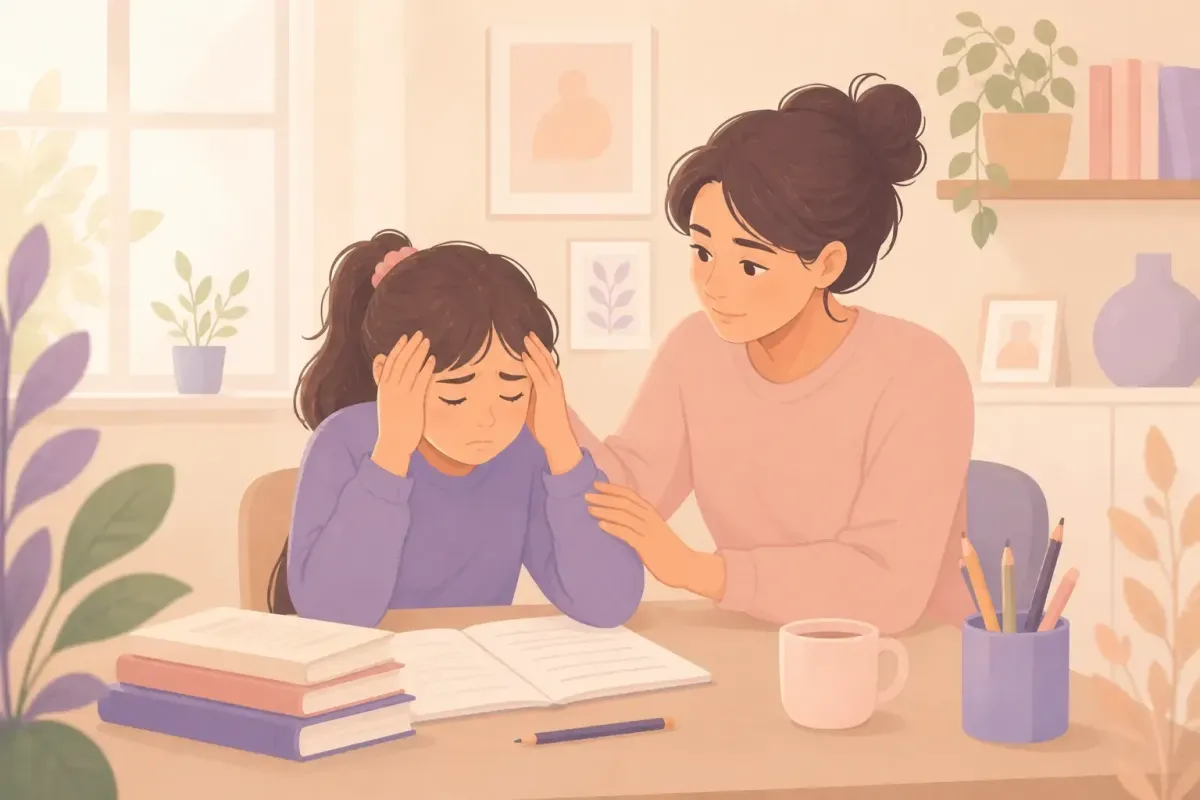
It's SATs week. Your Year 6 child — the one who has been practising reading comprehension and times tables for months — is refusing to get out of bed. Or they're crying before school. Or they snapped at you this morning for no apparent reason. Or they've gone completely quiet in a way that worries you more than the tears would.
You're doing everything right. You've kept things calm. You've said the right things. And yet here you are, at 7:45am, wondering how to get through the next hour — let alone the next four days.
Take a breath. What you're seeing isn't a sign that something has gone wrong with your child. It's a sign that something is very right: they care, they feel things deeply, and they haven't yet built the emotional toolkit to manage pressure this concentrated. That's not a flaw. That's their age.
In this article, I'm going to explain why SATs trigger such intense reactions in children, what the most common mistakes parents make during SATs week actually look like (with the best of intentions), and what genuinely helps — drawn from over a decade in primary classrooms and years of conscious parenting coaching.
A note before we begin:
SATs week is 11–14 May 2026. If you're reading this in the middle of it — right now — skip straight to the section 'What actually helps this week.' You can read the rest afterwards.
Why SATs feel so enormous to a 10 or 11-year-old

Adults sometimes underestimate how much weight children absorb from the world around them.
By the time a child reaches SATs week, they have typically heard the word “SATs” hundreds of times — from teachers, from parents, from older children who’ve been through it, and through school preparation sessions. Even when adults try to keep things low-key, children pick up on subtle signals.
The reality is that KS2 SATs are not high-stakes for children in the way many families believe. They don’t determine secondary school placement. They don’t affect a child’s long-term academic trajectory. They are a measure of school performance — not child potential.
But a Year 6 child cannot fully hold that nuance.
What they experience instead is something much simpler:
This is important.
Adults are paying attention.
My performance will be judged.
For children who are already anxious, perfectionistic, or sensitive — or those with ADHD, dyslexia, or other additional needs — that pressure doesn’t just feel big.
It can feel genuinely overwhelming in a physiological sense.
Their nervous system responds to the perceived threat in exactly the same way it would to real danger.
This is not drama.
👉 This is dysregulation.
Signs Your Child Is Struggling, Not “Just Being Difficult”
Before we talk about what to do, it helps to recognise what SATs-related stress actually looks like in children.
Because it doesn’t always look like crying or saying “I’m scared.”
It often looks like:
Irritability and snapping, especially at you, the safe person
Clinginess or regression, wanting to sleep in your bed, not wanting you to leave
Physical complaints, stomach aches, headaches, feeling sick (real stress responses)
Withdrawal, going quiet, seeming flat or disconnected
Sleep disturbance, difficulty falling asleep, waking at night
Refusal or avoidance, not wanting to go to school, hiding, “losing” their bag
Perfectionism spiralling, erasing work repeatedly, saying “I can’t do anything right”
If your child is showing several of these, they’re not being dramatic.
Their nervous system is in a low-grade threat response.
Your job this week is not to fix their anxiety.
It’s to help them feel safe enough to function.
What NOT to Do (Even with the Best Intentions)

This isn’t about blame. Every pattern below comes from love.
But naming them helps.
Talking about SATs constantly
Even reassurance keeps the topic alive. The more it’s mentioned: even to say “don’t worry”, the more the brain labels it as something important.
Comparing them to others
“Your cousin revised every evening…” lands as criticism. Your child is already comparing themselves.
Catastrophising (even subtly)
If you feel that SATs matter enormously, your child will sense it. Your nervous system becomes theirs.
Trying to “fix” the emotion
When your child says, “I can’t do it,” arguing back feels dismissive. They need to feel heard first, not corrected.
Last-minute cramming
By this stage, your child knows what they know.
👉 Sleep, food, and calm matter more than another practice paper.
What Actually Helps This Week
These strategies are drawn from both conscious parenting research and over a decade of watching real children move through exam stress in primary school settings. They are not complicated. They are also much harder to do than they sound — especially when you're anxious yourself.
1. Acknowledge the feeling before you do anything else
When your child says they don't want to go to school, or that they're scared, the most powerful thing you can say is: "I know. This feels really big right now." That's it. Don't pivot to solutions immediately. Sit in the feeling with them for a moment. Feeling understood is itself regulating for a child's nervous system.
If you want to go further, try: "That makes complete sense. Your body is doing what bodies do when something feels important. That doesn't mean anything bad is going to happen — it means you care."
2. Externalise the worry
A simple technique from CBT for children: give the anxiety a name and a shape. Ask your child to draw their worry as a character, or give it a silly name ('the SATs monster'). This moves the anxiety from inside them — where it feels all-consuming — to outside them, where they can look at it and talk about it more objectively.
3. Regulate together, not in isolation
Children co-regulate with their caregivers. You cannot just tell a child to calm down — but your own calmness genuinely transfers to them. Try a slow breathing exercise together (breathe in for 4 counts, hold for 4, out for 6) before school. Do it together. You'll both benefit.
4. Keep routines as normal as possible
Consistency is safety for children. If they normally watch 30 minutes of TV after school, let them. If they have a walk routine, keep it. If they have a favourite breakfast, make it. The SATs are disrupting enough of their world — keep everything else steady.
5. Make the morning of each test the same
A predictable morning ritual removes one layer of cognitive load. The same breakfast. The same departure time. A brief, warm send-off: something like 'I'm proud of you no matter what happens in that room today. See you at 3:30.' Then let them go.
6. Separate your emotions from theirs
This is the hardest one. If your child's anxiety is also activating your own anxiety — about their future, about whether you've done enough, about what the results say about them or you — those are feelings worth sitting with privately or talking to someone else about. Your child cannot hold both their anxiety and yours.
If your child has ADHD, sensory needs, or high anxiety
For children with ADHD or additional learning needs, SATs week can be disproportionately difficult, and the strategies above, while useful, may not be enough on their own.
Children with ADHD in particular may struggle with:
The sudden increase in structure and sitting time
The withdrawal of enjoyable activities in favour of 'test preparation mode' at school
Emotional regulation challenges that make the anxiety feel even more acute
Difficulty sleeping, which worsens all of the above in a cycle
If your child receives SEND support at school, including an Education, Health and Care (EHC) Plan under the Children and Families Act 2014, they may be entitled to access arrangements for the SATs, including extra time, rest breaks, or a reader. If you're unsure whether these have been put in place, contact the school's SENCO this week. You have a right to ask.
You can also read our related post: ADHD Parenting Guide.
After SATs: the bit parents often forget
The last paper is on Thursday 14 May. For most families, there's a collective exhale and then the children come home. Here's what many parents don't expect:
Some children feel flat or deflated after SATs, not relieved. There can be a sense of anticlimax, 'is that it?', which for anxious or emotionally sensitive children can tip into low mood. This is normal and usually passes within a few days.
Others will want to debrief immediately 'I got question 7 wrong, I know I did.' Try not to engage with this in the moment. Instead: 'I don't want to talk about the papers right now. I want to talk about you. How are you feeling? What do you want to do this afternoon?'
Plan something they enjoy for Thursday afternoon. Not a 'reward' with conditions attached just something because the intensity is over and they deserve a gentle landing.
Why SATs feel so enormous to a 10 or 11-year-old
Adults sometimes underestimate how much weight children absorb from the world around them. By the time a child reaches SATs week, they have typically heard the word 'SATs' hundreds of times — from teachers, from parents, from older children who've been through it. Even when adults try to keep things low-key, children pick up on subtle signals.
The reality is thatKS2 SATs are not high-stakes for children in the way many families believe.They don't determine secondary school placement. They don't affect a child's long-term academic trajectory. They are a measure ofschool performance, not child potential. But a Year 6 child cannot fully hold that nuance. What they experience is: this is important, adults are paying attention, and my performance will be judged.
For children who are already anxious, perfectionistic, or sensitive — or those with ADHD, dyslexia, or other additional needs — that pressure doesn't just feel big. It can feel genuinely overwhelming in a physiological sense: their nervous system responds to the perceived threat in exactly the same way it would to a real danger.
This is not drama. This is dysregulation. And they are very different things.
Signs your child is struggling — not 'just being difficult'
Before we talk about what to do, it helps to recognise what SATs-related stress actually looks like in children — because it doesn't always look like crying or saying "I'm scared." It often looks like something else entirely.
SATs stress looks different in every child
Seeing several of these? That's not drama, that's dysregulation. Keep reading.
If your child is showing several of these, their nervous system is in a low-grade threat response. Your job this week is not to fix their anxiety, it's to help their nervous system feel safe enough to function.
What not to do, even with the best intentions
Every mistake below comes from a place of love. But when we're in the thick of it, it helps to name the patterns that often make things worse.
Talking about SATs constantly
Even reassuranceaboutSATs keeps the topic alive and signals to your child that it's a significant threat worth thinking about. The more you bring it up — even to say "don't worry" — the more their brain files it under'this is something to worry about.'
Comparing their preparation to others
"Your cousin revised every evening last week" or "most children in your class seem fine about it" are well-meaning but land as criticism. Your child is already measuring themselves; they don't need help doing it.
Catastrophising on their behalf
If you believe, somewhere in your own anxiety, that SATs matter enormously — your child will sense it. Children are extraordinarily attuned to adult emotion. Your regulated nervous system is their regulation.
Trying to 'fix' the emotion rather than sitting with it
When your child says "I can't do it, I'm going to fail," the impulse is to argue with that belief. But this feels dismissive. They don't need to be corrected; they need to feel heard first.
Last-minute cramming
Revising the night before a SATs paper serves one purpose: increasing anxiety. By now, your child knows what they know. Sleep, food, and a calm morning are significantly more useful than another practice paper.
What actually helps this week
These strategies are drawn from both conscious parenting research and over a decade of watching real children move through exam stress in primary school settings. They are not complicated. They are also much harder to do than they sound — especially when you're anxious yourself.
1. Acknowledge the feeling before you do anything else
When your child says they don't want to go to school, or that they're scared, the most powerful thing you can say is:
"I know. This feels really big right now."
That's it. Don't pivot to solutions immediately. Sit in the feeling with them for a moment. Feeling understood is itself regulating for a child's nervous system.
2. Externalise the worry
A simple technique from CBT for children: give the anxiety a name or a shape. Ask your child to draw their worry as a character, or give it a silly name. This moves the anxiety from inside them — where it feels all-consuming — to outside them, where they can look at it and talk about it more objectively.
3. Regulate together, not in isolation
Children co-regulate with their caregivers. Your own calmness genuinely transfers to them. Try a slow breathing exercise together before school: breathe in for 4 counts, hold for 4, out for 6. Do it together. You'll both benefit.
4. Keep routines as normal as possible
Consistency is safety for children. If they normally watch 30 minutes of TV after school, let them. If they have a favourite breakfast, make it. The SATs are disrupting enough of their world — keep everything else steady.
5. Make the morning of each test the same
A predictable morning ritual removes one layer of cognitive load. The same breakfast. The same departure time. A brief, warm send-off:
"I'm proud of you no matter what happens in that room today. See you at 3:30."
Then let them go.
6. Separate your emotions from theirs
This is the hardest one. If your child's anxiety is also activating your own — about their future, about whether you've done enough — those are feelings worth sitting with privately. Your child cannot hold both their anxiety and yours.
Your child's behaviour this week isn't about the test.
When meltdowns happen during SATs week, they're telling you something important about how your child is feeling — not about how intelligent they are. Sometimes one calm conversation changes everything.
No commitment. No pressure. Just clarity.
If your child has ADHD, sensory needs, or high anxiety
For children with ADHD or additional learning needs, SATs week can be disproportionately difficult — and the strategies above, while useful, may not be enough on their own.
Children with ADHD in particular may struggle with:
The sudden increase in structure and sitting time
Withdrawal of enjoyable activities in favour of "test preparation mode" at school
Emotional regulation challenges that make the anxiety feel even more acute
Difficulty sleeping, which worsens all of the above in a cycle
If your child receives SEND support at school including an Education, Health and Care (EHC) Plan under the Children and Families Act 2014 , they may be entitled to access arrangements for the SATs, including extra time, rest breaks, or a reader. If you're unsure whether these have been put in place, contact the school's SENCO this week. You have a right to ask.
You can also read: Why Does My Child Have Meltdowns Over Small Things?
After SATs: the bit parents often forget

The last paper is on Thursday 14 May. For most families, there's a collective exhale, and then the children come home. Here's what many parents don't expect:
Some children feel flat or deflated after SATs, not relieved.There can be a sense of anticlimax — "is that it?" — which for anxious or emotionally sensitive children can tip into low mood. This is normal and usually passes within a few days.
Others will want to debrief immediately: "I got question 7 wrong, I know I did." Try not to engage with this in the moment. Instead:
"I don't want to talk about the papers right now. I want to talk aboutyou. How are you feeling? What do you want to do this afternoon?"
Plan something they enjoy for Thursday afternoon. Not a reward with conditions attached — just something because the intensity is over and they deserve a gentle landing.


