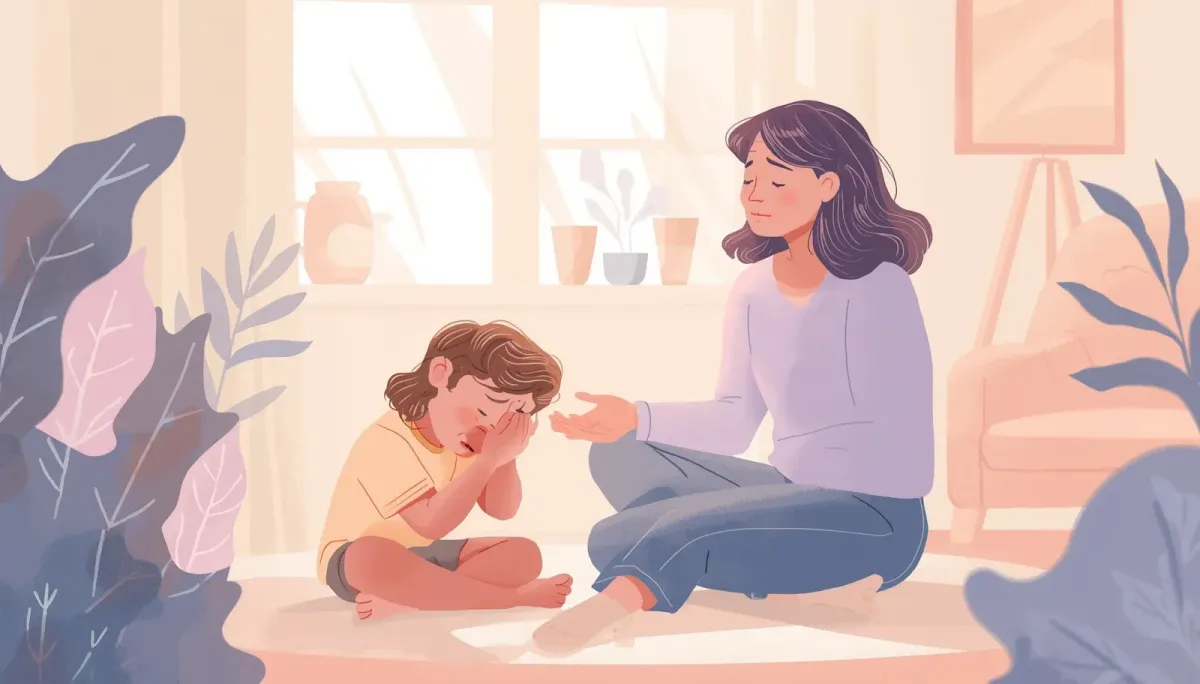
Why Does My Child Have Meltdowns Over Small Things?
It doesn’t feel small when you’re in it.
It starts with something tiny.
The wrong cup.
The wrong tone.
A “no” they weren’t expecting.
And suddenly… it’s big.
Crying. Shouting.
Doors slamming.
You trying to stay calm — but feeling your own frustration rising.
You might find yourself thinking:
“Why is this such a big deal?”
“Other kids don’t react like this…”
“Am I doing something wrong?”
And then comes the part no one really talks about:
You feel exhausted. Confused. Sometimes even a little resentful.
And then guilty for feeling that way.
If this sounds like your home, you’re not alone.
And more importantly — your child isn’t overreacting for no reason.
Why “Small Things” Aren’t Actually Small

From the outside, it looks like an overreaction.
From the inside, it’s something very different.
Children don’t melt down because of the thing in front of them.
They melt down because of everything underneath it.
That “small thing” is often just the tipping point.
Underneath, there might be:
A full day of holding things together
Sensory overload
Feeling misunderstood
Emotional needs that haven’t been met yet
So when something minor happens, it’s not just about that moment.
It’s the moment where their system says:
“I can’t hold this anymore.”
What a Meltdown Really Is (And What It Isn’t)
A meltdown is not:
Manipulation
Attention-seeking
Bad behaviour
A meltdown is:
Overwhelm
Loss of regulation
A nervous system in distress
This matters.
Because when we misread the behaviour, we respond in ways that unintentionally make it worse.
Why It Starts to Feel Personal
After enough of these moments, it’s hard not to take it personally.
You’re trying.
You’re showing up.
And still — it keeps happening.
You might notice thoughts like:
“They only do this with me.”
“Why can’t they just listen?”
“I must be doing something wrong.”
And here’s the truth:
Children feel safest where they fall apart.
That’s why you see it at home more than anywhere else.
Not because you’re failing.
But because you’re their safe place.
Real Moments Parents Quietly Recognise

Let’s make this real.
Morning chaos
You ask them to get dressed.
They ignore you.
You repeat it.
They snap: “STOP TELLING ME!”
And suddenly the whole morning spirals.
Homework time
You sit down to help.
One mistake… and they shut down.
Tears. Anger. “I can’t do this.”
Bedtime
They’re tired.
Everything becomes harder.
A simple request turns into a full emotional storm.
These aren’t random moments.
They’re patterns.
And patterns usually point to something deeper going on.
What’s Often Happening Underneath
Understanding this changes how you respond.
1. Emotional overload
Children don’t always process emotions as they go.
They store them — until they can’t anymore.
2. Difficulty expressing needs
Many children don’t have the words for what they’re feeling.
So instead of saying:
“I’m overwhelmed”
You see:
“I hate this!”
“Leave me alone!”
If you’re unsure what your child is really trying to communicate, this can help you start seeing beneath the behaviour.
3. Sensory or environmental triggers
Noise. Transitions. Changes. Pressure.
Things that seem small to you can feel big to them.
4. Something happening outside the home
Sometimes meltdowns are not about home at all.
They’re about what your child is holding in during the day.
If something feels “off,” it’s worth gently exploring whether your child might be struggling socially.
Why Traditional Responses Often Backfire
When meltdowns happen, most parents instinctively try to:
Stop the behaviour
Reason with their child
Set consequences
Explain why it’s not a big deal
But in that moment, your child is not in a place to:
Listen
Understand
Learn
They’re overwhelmed.
And overwhelm doesn’t respond to logic.
It responds to regulation.
What Actually Helps in the Moment
You don’t need a perfect script.
You need something simple and grounding.
1. Regulate yourself first
Before anything else — pause.
Your calm helps their nervous system settle.
Not instantly.
But gradually.
2. Use fewer words
Too many words can overwhelm more.
Try:
“I’m here.”
“This feels big right now.”
That’s enough.
3. Stay close (if they allow it)
Presence matters more than fixing.
Even sitting quietly nearby can help them feel safer.
4. Don’t rush resolution
The goal isn’t to “end it quickly.”
The goal is to help your child move through it safely.
What Helps Over Time (Not Just in the Moment)
Meltdowns don’t disappear overnight.
But they do change when the underlying needs are supported.
Build predictable routines
Children feel safer when they know what’s coming.
Reduce pressure where possible
Some children are constantly trying to “keep up.”
That effort builds stress.
Create space for emotional expression
Not just during meltdowns — but before them.
Strengthen connection
When children feel understood regularly, they need to “explode” less.
After the Meltdown: Repair, Not Blame
When things are calm again, this moment matters.
Instead of:
“Why did you do that?”
Try:
“That felt really big earlier.”
“Let’s figure out what made it hard.”
This is where learning happens.
Not in the heat of the moment.
The Part Many Parents Carry Alone
Meltdowns are not just hard for children.
They’re hard for you.
Because:
You feel judged
You question yourself
You worry about the future
And sometimes, you just feel tired of it all.
That doesn’t make you a bad parent.
It makes you human.
A Gentle Invitation
If you’re dealing with frequent meltdowns…
If you feel like you’re walking on eggshells…
If you’re not sure how to respond without things escalating…
You don’t have to keep figuring this out alone.
👉 You can book a free, confidential call here:
https://www.littleoneslifecoach.com/free-call-form
Sometimes one calm conversation can help you see what’s really going on — and what will actually help your child.


