
How to Identify Your Child’s Needs (When Behaviour Is the Only Language They Have)
Most parents don’t struggle because they don’t care.
They struggle because they can’t work out what their child actually needs in the moment.
You might find yourself asking:
Why is my child acting like this?
What am I missing?
I’ve tried everything — why isn’t it working?
This article is here to slow that question down.
Because children don’t always tell us their needs with words.
They tell us through behaviour.
And once you learn how to read that behaviour differently, parenting starts to feel less like firefighting and more like understanding.
Behaviour Is Communication (Even When It’s Hard to Watch)
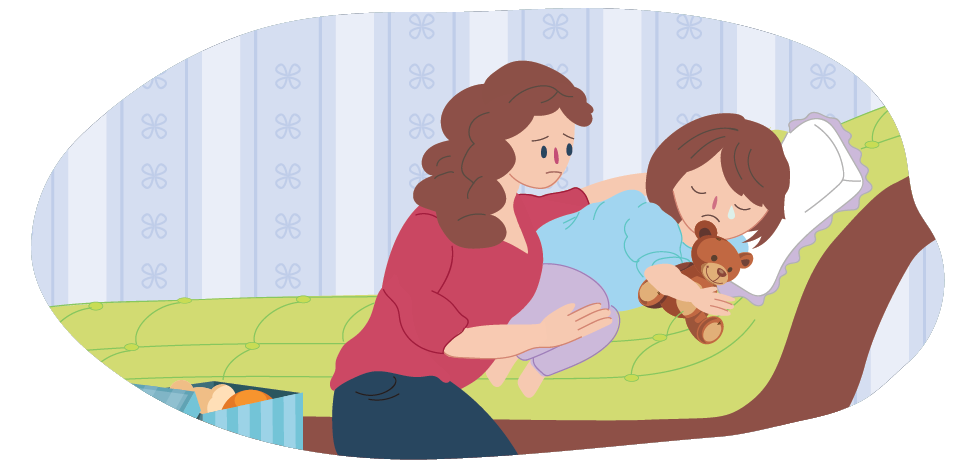
One of the most important shifts a parent can make is this:
Behaviour is not the problem.
Behaviour is the signal.
Children don’t wake up wanting to struggle.
They don’t choose to be difficult.
They respond to what’s happening inside them — and around them.
When a child:
Yells
Withdraws
Hits
Refuses
Melts down
They are telling you something.
Your job is not to stop the signal.
Your job is to understand it.
Why It’s So Hard to Identify a Child’s Needs in the Moment
When a child is dysregulated, parents often become dysregulated too.
Your nervous system reacts:
Your heart rate increases
Your patience drops
Your thinking narrows
In those moments, it’s hard to stay curious.
Instead, the brain goes into:
How do I make this stop?
Why won’t they listen?
What am I doing wrong?
This is not a parenting failure.
It’s biology.
Understanding your child’s needs starts with slowing the moment down.
The Four Core Needs Behind Most Challenging Behaviour
While every child is different, many behaviours come back to a few core unmet needs.
1. Regulation (Not Discipline)
Many behaviours are signs of nervous system overload.
Your child may need:
Calm
Co-regulation
Predictability
A pause
This is especially true for children with ADHD or sensory sensitivity.
If ADHD is part of your child’s world, you may find this helpful: 12 gentle ways to reduce ADHD-related overwhelm in children.
Before asking “What consequence is needed?”
Ask “Is my child regulated enough to cope right now?”
2. Safety (Emotional and Physical)
Children need to feel safe to behave well.
Safety includes:
Feeling understood
Knowing what to expect
Feeling protected during big emotions
When safety feels threatened, behaviour escalates.
This is particularly important if your child shows aggression or intense reactions.
You may want to read: A parent’s guide to safety when a child becomes aggressive.
Safety always comes before lessons.
3. Connection (Before Correction)
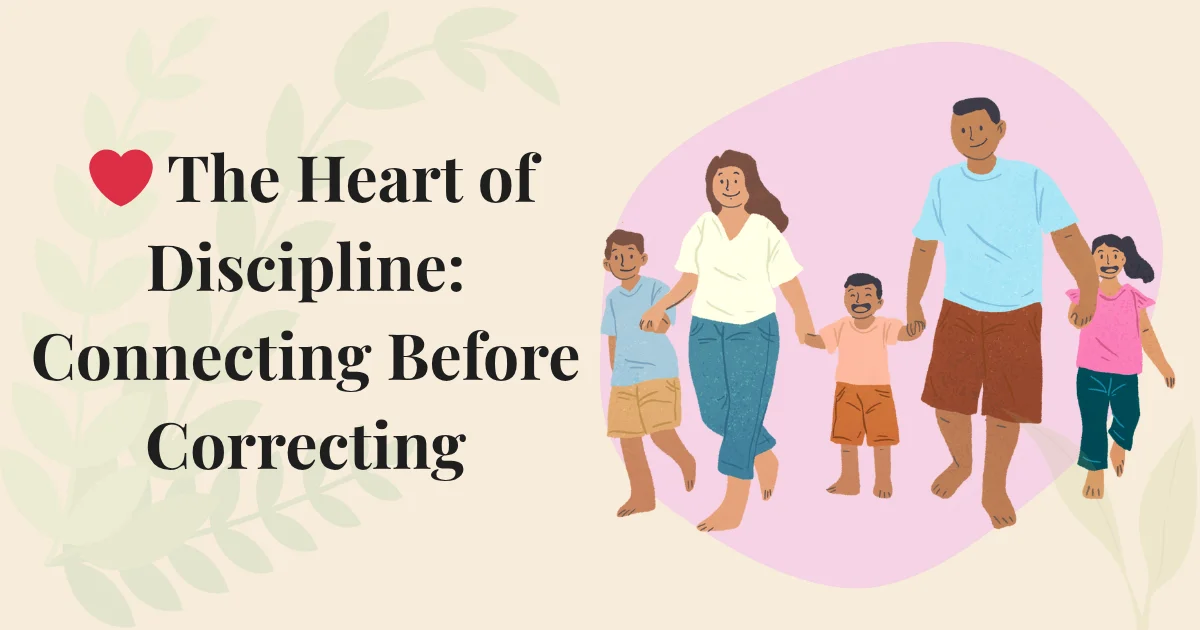
Many behaviours intensify when connection feels shaky.
Children may act out when they feel:
Disconnected
Overlooked
Competing for attention
Emotionally alone
Connection doesn’t mean permissiveness.
It means presence.
A child who feels connected is more open to guidance.
4. Understanding and Skill-Building
Sometimes behaviour simply means:
“I don’t know how to do this yet.”
Children may lack skills in:
Emotional expression
Transitions
Waiting
Problem-solving
Punishment doesn’t teach skills.
Support does.
If you’re trying to guide behaviour without raising your voice, this can help: How to discipline your child without yelling.
How to Pause and Identify Your Child’s Need (A Simple Framework)
In the moment, you don’t need a perfect response.
You need a pause.
Try this simple mental checklist:
Is my child regulated?
If not, calm first.Is there a safety issue?
If yes, protect and contain.Is my child seeking connection?
If yes, connect before correcting.Is a skill missing?
If yes, teach later — not during the meltdown.
This isn’t about doing it right every time.
It’s about responding with intention.
Identifying Needs in Children with ADHD
Children with ADHD often experience:
Faster overwhelm
Stronger emotional reactions
Difficulty with transitions
Sensory sensitivity
Their behaviour is often misunderstood as defiance.
In reality, it’s frequently about capacity.
Natural, supportive approaches can make a real difference.
You may find this helpful: Natural ways to help a child manage ADHD day to day.
When you look at behaviour through a needs-based lens, things start to make sense.
Why Identifying Needs Changes Everything
When parents shift from:
“How do I stop this behaviour?”
to
“What does my child need right now?”
Everything softens.
You may notice:
Fewer power struggles
More cooperation over time
Less guilt
More confidence in your responses
Not because behaviour disappears.
But because it’s understood.
You Don’t Have to Figure This Out Alone
Many parents know, logically, that behaviour is communication — but still feel stuck in the moment.
That’s where support can help.
Sometimes you need:
A calm outside perspective
Help understanding patterns
Reassurance that you’re not failing
Tools that fit your child
If you’d like a gentle space to talk through what you’re seeing at home, you’re welcome to schedule a free discovery call.
A Final Thought
Your child is not giving you a hard time.
They’re having a hard time.
And when you learn to identify their needs — even imperfectly — you become the steady place they can lean into.
That matters more than getting it right.


